
What to Expect During a Full Mouth Rehabilitation
A comprehensive guide to the timeline, diagnostic stages, and transformative results of a full mouth rehabilitation designed to restore bite, form, and function.
When severe dental problems affect multiple teeth across the upper and lower arches, treating individual teeth one by one is often inadequate. Severe tooth wear from bruxism (grinding), widespread decay, multiple missing teeth, and collapsed bite vertical dimension require a comprehensive, holistic approach.
This is where Full Mouth Rehabilitation (FMR)—also known as full mouth reconstruction—comes in. Rather than applying quick patches, FMR orchestrates prosthodontics, periodontics, and aesthetic dentistry into a single, cohesive plan to rebuild your oral health from the foundation up.
Who Needs a Full Mouth Rehabilitation?
Full mouth reconstruction is tailored for individuals experiencing widespread structural and functional oral breakdown, such as:
- Extensive tooth wear resulting from chronic clenching, night-time grinding, or acid reflux (GERD)
- Multiple missing teeth accompanied by shifting and collapsed bite height
- Chronic jaw stiffness, popping, headaches, and facial muscle fatigue caused by an unbalanced TMJ bite
- Advanced periodontal damage combined with deteriorating restorations
- Trauma or hereditary conditions that have compromised tooth alignment and structure
Phase 1: Deep Clinical Diagnostics and 3D Smile Mapping
The first phase is exclusively diagnostic. Before any irreversible treatment is performed, our team collects high-resolution records:
- 3D CBCT digital imaging to assess bone density, nerve pathways, and TMJ joint health
- Facebow recordings and digital articulator mounting to replicate your unique jaw dynamics
- Periodontal charting to verify bone and gum stability
- Digital Smile Design (DSD) to simulate optimal tooth length, arch width, and aesthetic balance
Phase 2: Stabilising the Biological Foundation
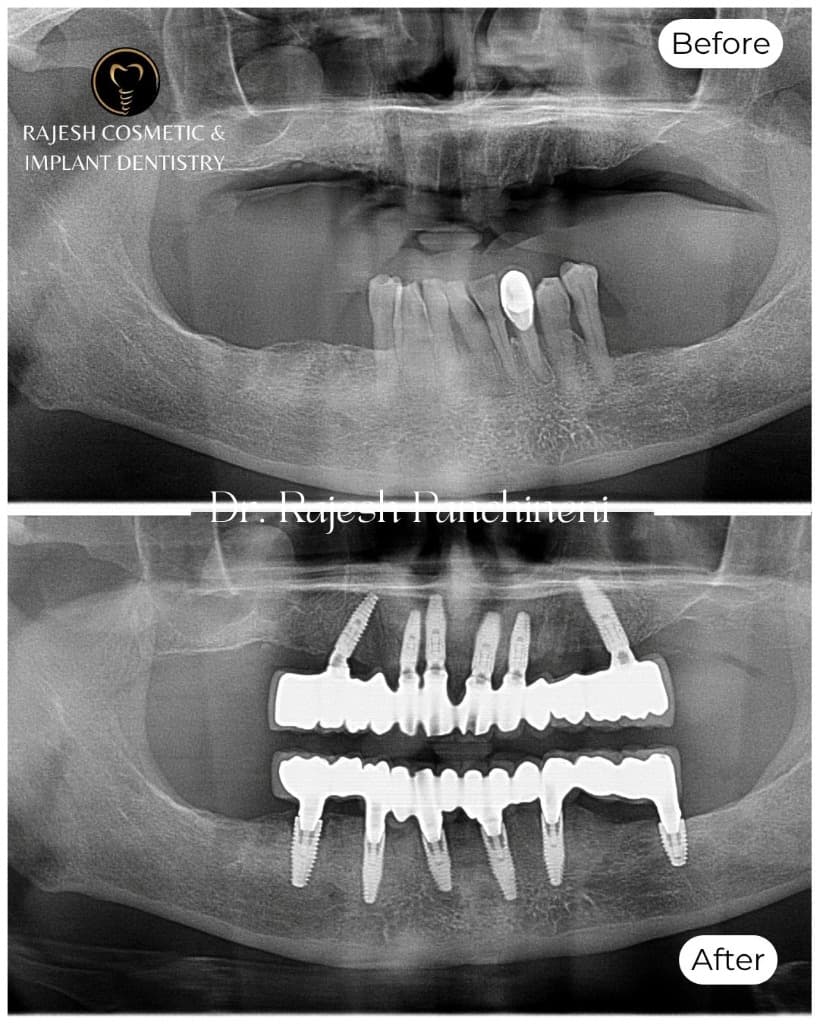
No permanent crown, veneer, or implant should ever be placed on an inflamed foundation. In this phase, we resolve all active pathology:
Deep ultrasonic scaling and root planing are performed to restore gum health. Any non-restorable teeth are extracted, necessary root canals are completed under dental operating microscopes, and bone grafting or dental implants are placed where teeth are absent.
Phase 3: The Trial Smile with Long-Term Provisionals
One of the most critical steps in full mouth rehabilitation is the provisional (temporary) stage. We fabricate highly accurate, functional acrylic or composite provisionals that reflect your newly planned bite height and aesthetic smile line.
You will live and chew with these provisionals for several weeks. This allows our team to confirm that your jaw muscles are relaxed, your TMJ is comfortable, and your phonetics and chewing are effortless before the laboratory crafts permanent ceramics.
Phase 4: Placement of Definitive Restorations
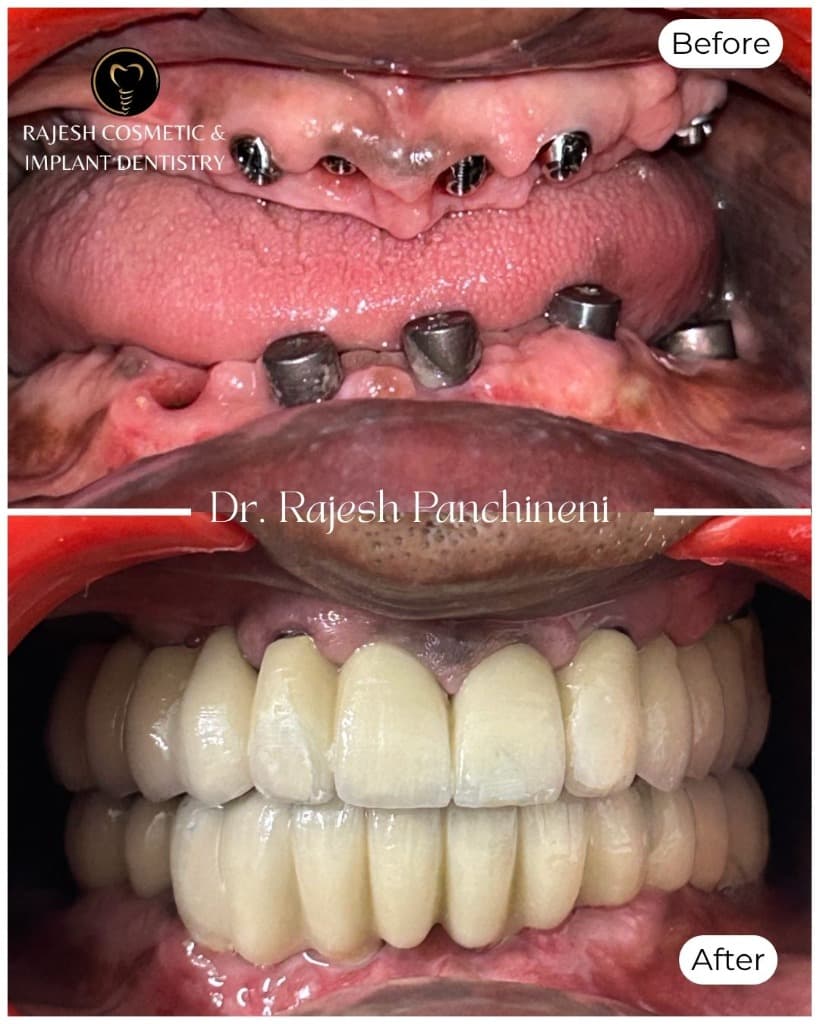
Once the provisional bite is proven stable, our master dental laboratory crafts your final restorations using high-strength zirconia, E.max lithium disilicate, and custom implant prosthetics.
Each restoration is meticulously bonded and checked for microscopic occlusal harmony. The result is a renewed bite with balanced chewing forces, beautiful youthful facial support, and restored oral health.
Protecting Your New Smile
Following completion, patients receive a custom protective occlusal night guard to protect the ceramic restorations from nocturnal clenching forces. Routine professional cleanings and bi-annual examinations ensure your investment remains flawless for decades.
Frequently Asked Questions
How long does a full mouth rehabilitation take?
Depending on case complexity and whether implant healing or bone integration is required, treatment typically spans 2 to 6 months. Patients wear fully functional, aesthetic provisionals throughout the entire healing phase.
Is full mouth reconstruction painful?
No. All procedures are carried out under profound local anaesthesia. While mild muscle soreness can occur when adapting to a newly elevated bite, discomfort is easily managed with mild medications.
Can FMR relieve chronic headaches and TMJ discomfort?
Yes. When worn-down teeth collapse the bite, the jaw joint is forced into an unnatural, compressed position that strains facial muscles. Re-establishing the correct vertical dimension of occlusion often dramatically relieves TMJ symptoms.
What is the difference between a smile makeover and FMR?
A smile makeover focuses primarily on the aesthetic zone (front teeth visible when smiling). Full mouth rehabilitation comprehensively rebuilds both functional posterior chewing teeth and aesthetic front teeth together with TMJ alignment.
Related Reading
The Top 5 Benefits of Permanent Dental Implants
Discover why permanent dental implants are considered the gold standard for tooth replacement, offering bone preservation, 90%+ bite force, and lifelong durability.
Dental Veneers: A Complete Guide from a Cosmetic Dentist in Bengaluru
Everything you need to know about dental veneers: types, who they suit, the step-by-step process, how long they last, and how to choose the right cosmetic dentist in Bengaluru for veneers.