
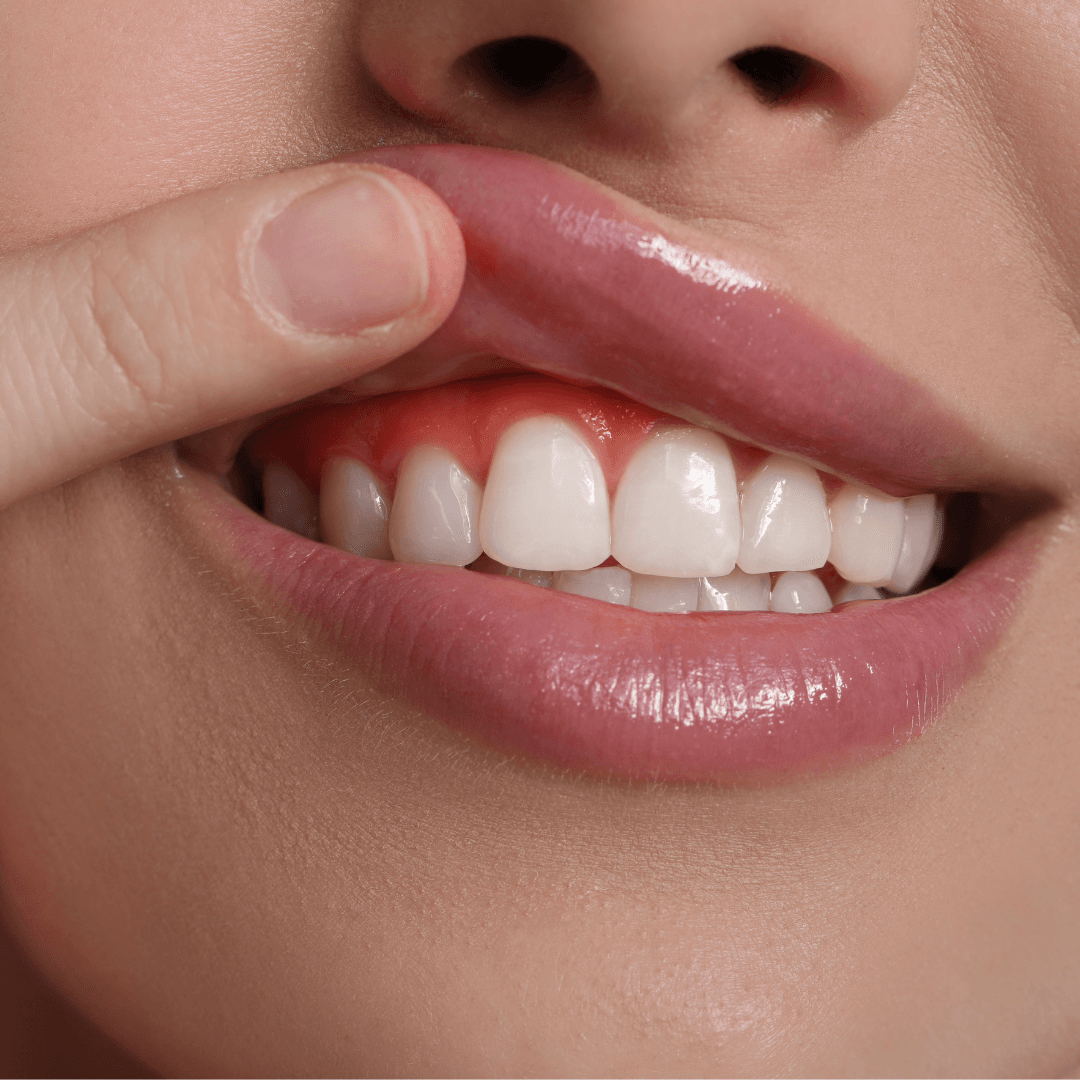

Advanced Periodontal Care and Gum Disease Management in JP Nagar
Gum Treatment
Gum disease (periodontal disease) is the most common chronic inflammatory condition in the world, and the leading cause of tooth loss in adults over 40. Alarmingly, it is also strongly linked to systemic conditions including cardiovascular disease, diabetes, and preterm birth. At Rajesh Cosmetic and Implant Dentistry, Dr. Rajesh Panchineni provides the complete spectrum of periodontal therapy: from early non-surgical intervention to advanced regenerative surgery, always with the goal of preserving your natural teeth and your overall health.
At a Glance
Sub-services
Explore Treatments
Periodontal disease is often entirely painless in its early stages, earning the name 'the silent disease.' Every patient at our clinic undergoes a comprehensive periodontal chart at their initial examination: we measure pocket depths at six sites per tooth, assess bone levels on diagnostic X-rays, and record bleeding on probing, recession, and mobility. This gives us a complete picture of your periodontal status and allows us to recommend the most appropriate intervention.
The foundation of all periodontal treatment is professional removal of calculus (tartar) and plaque biofilm from above and below the gum line. Supragingival scaling (above the gum) removes visible calculus buildup, while subgingival scaling (below the gum) accesses the bacterial deposits that cause active bone loss in periodontal disease. A professional prophylaxis is recommended every 6 months for healthy patients and every 3 months for patients with active or controlled periodontal disease.
When periodontal disease has progressed beyond gingivitis into the bone-supporting structures, a deeper intervention is required. Scaling and root planing is an intensive, quadrant-by-quadrant procedure performed under local anaesthesia: calculus is removed from the root surfaces deep below the gum line, and the root is then planed smooth to prevent bacterial reattachment and encourage the gum tissue to reattach to the tooth surface. Most early-to-moderate periodontitis cases respond well to this non-surgical treatment.
Dental lasers offer a significant advancement in periodontal therapy. The LANAP (Laser-Assisted New Attachment Procedure) protocol uses targeted laser energy to selectively eliminate diseased tissue and bacteria within the periodontal pocket without cutting with a scalpel. This results in reduced post-operative swelling, faster healing, and, critically, the potential for periodontal regeneration: stimulating new bone and connective tissue attachment to the root surface.
For deep pockets (>5mm) that do not fully resolve with SRP, surgical intervention is required to gain direct visual access to the root and bone. Periodontal flap surgery involves reflecting the gum tissue, debriding the root and bone surface under magnification, reshaping the bone contour (osseous surgery) where necessary, and suturing the gum back into an improved position. This definitively reduces pocket depths and arrests bone loss.
In cases where significant bone has been lost around teeth, bone grafting materials, combined with barrier membranes (guided tissue regeneration), can encourage the body to regenerate lost bone and periodontal ligament. While not all defects are candidates for regeneration, angular (intrabony) defects often respond spectacularly to regenerative therapy, allowing teeth that would otherwise be extracted to be retained long-term.
Gum recession exposes the sensitive root surface, causing pain to hot and cold, increased cavity risk on exposed roots, and an aesthetically unpleasant 'long tooth' appearance. Connective Tissue Grafts (CTG), where donor tissue from the palate is transplanted to the receded area, are the gold standard for root coverage. The technique predictably recovers the exposed root, reduces sensitivity, and restores the gum line to its ideal position.
Periodontal disease is a chronic, manageable condition, not a curable one. After active treatment stabilises the condition, patients are enrolled in a structured maintenance programme with recall appointments every 3–4 months. At each visit, pockets are re-charted, any early reactivation is identified and treated, and professional cleaning maintains the level of oral hygiene achieved by active treatment. Consistent maintenance is what allows treated periodontal patients to retain their teeth for decades.
Gum Disease Screening & Diagnosis
Periodontal disease is often entirely painless in its early stages, earning the name 'the silent disease.' Every patient at our clinic undergoes a comprehensive periodontal chart at their initial examination: we measure pocket depths at six sites per tooth, assess bone levels on diagnostic X-rays, and record bleeding on probing, recession, and mobility. This gives us a complete picture of your periodontal status and allows us to recommend the most appropriate intervention.
Professional Scaling & Teeth Cleaning
The foundation of all periodontal treatment is professional removal of calculus (tartar) and plaque biofilm from above and below the gum line. Supragingival scaling (above the gum) removes visible calculus buildup, while subgingival scaling (below the gum) accesses the bacterial deposits that cause active bone loss in periodontal disease. A professional prophylaxis is recommended every 6 months for healthy patients and every 3 months for patients with active or controlled periodontal disease.
Deep Cleaning, Scaling & Root Planing (SRP)
When periodontal disease has progressed beyond gingivitis into the bone-supporting structures, a deeper intervention is required. Scaling and root planing is an intensive, quadrant-by-quadrant procedure performed under local anaesthesia: calculus is removed from the root surfaces deep below the gum line, and the root is then planed smooth to prevent bacterial reattachment and encourage the gum tissue to reattach to the tooth surface. Most early-to-moderate periodontitis cases respond well to this non-surgical treatment.
Laser-Assisted Periodontal Therapy
Dental lasers offer a significant advancement in periodontal therapy. The LANAP (Laser-Assisted New Attachment Procedure) protocol uses targeted laser energy to selectively eliminate diseased tissue and bacteria within the periodontal pocket without cutting with a scalpel. This results in reduced post-operative swelling, faster healing, and, critically, the potential for periodontal regeneration: stimulating new bone and connective tissue attachment to the root surface.
Periodontal Surgery, Flap Surgery
For deep pockets (>5mm) that do not fully resolve with SRP, surgical intervention is required to gain direct visual access to the root and bone. Periodontal flap surgery involves reflecting the gum tissue, debriding the root and bone surface under magnification, reshaping the bone contour (osseous surgery) where necessary, and suturing the gum back into an improved position. This definitively reduces pocket depths and arrests bone loss.
Bone Grafting for Periodontal Regeneration
In cases where significant bone has been lost around teeth, bone grafting materials, combined with barrier membranes (guided tissue regeneration), can encourage the body to regenerate lost bone and periodontal ligament. While not all defects are candidates for regeneration, angular (intrabony) defects often respond spectacularly to regenerative therapy, allowing teeth that would otherwise be extracted to be retained long-term.
Gum Grafting, Treating Gum Recession
Gum recession exposes the sensitive root surface, causing pain to hot and cold, increased cavity risk on exposed roots, and an aesthetically unpleasant 'long tooth' appearance. Connective Tissue Grafts (CTG), where donor tissue from the palate is transplanted to the receded area, are the gold standard for root coverage. The technique predictably recovers the exposed root, reduces sensitivity, and restores the gum line to its ideal position.
Periodontal Maintenance Programme
Periodontal disease is a chronic, manageable condition, not a curable one. After active treatment stabilises the condition, patients are enrolled in a structured maintenance programme with recall appointments every 3–4 months. At each visit, pockets are re-charted, any early reactivation is identified and treated, and professional cleaning maintains the level of oral hygiene achieved by active treatment. Consistent maintenance is what allows treated periodontal patients to retain their teeth for decades.
Key Benefits
- ✓Arrests active bone destruction before teeth are lost
- ✓Eliminates chronic bad breath (halitosis) caused by bacterial toxins
- ✓Reduces systemic inflammation linked to heart disease and diabetes
- ✓Laser therapy offers faster healing with less post-operative discomfort
- ✓Regenerative surgery can recover lost bone volume
- ✓Gum grafting restores the gum line and covers exposed roots
- ✓Structured maintenance prevents disease reactivation
- ✓Preserves natural teeth for the long term
Why Rajesh Dental
Periodontal health is the bedrock upon which all other dental work rests. At Rajesh Cosmetic and Implant Dentistry, every treatment plan begins with a thorough periodontal assessment, and we will not place permanent restorations until the gum foundation is stable. Dr. Rajesh Panchineni's expertise in periodontal surgery, laser therapy, and regenerative techniques means that patients with advanced gum disease receive the specialist-level care they need, without referral to an external clinic.
Frequently Asked Questions
Early warning signs include bleeding gums when brushing or flossing, red or swollen gums, persistent bad breath, gum recession giving a 'long tooth' appearance, and teeth that feel loose or have shifted position. Many patients have no symptoms at all in the early stages, which is why regular check-ups with a periodontal assessment are essential.
Gingivitis (the earliest stage, affecting only the gum tissue) is fully reversible. Periodontitis (involving bone loss) is not curable but is highly manageable: active treatment arrests bone loss and maintenance prevents its return. With consistent professional care and good home hygiene, periodontal patients can retain their teeth for life.
Standard scaling is generally comfortable. Deep cleaning (SRP) is performed under local anaesthesia, making the procedure painless. Mild tenderness and gum sensitivity for 2–3 days post-treatment is normal and resolves quickly. Most patients are surprised at how tolerable the procedure is.
The oral bacteria responsible for periodontal disease can enter the bloodstream through inflamed gum tissue and contribute to the formation of arterial plaques. Multiple large-scale studies have demonstrated a statistically significant association between untreated periodontal disease and increased risk of cardiovascular disease, stroke, and poorly controlled diabetes. Treating gum disease improves systemic inflammatory markers.
Patients with healthy gums benefit from a professional clean every 6 months. Patients who have been treated for periodontal disease should be on a 3-monthly maintenance schedule, research consistently shows this interval prevents disease reactivation. Patients with active disease may require monthly appointments during the initial stabilisation phase.
Ready to restore your smile?
Consult with our specialists to see if Gum Treatment is the right treatment plan for your clinical needs.
Call To BookTake the next step
Book a Consultation Today
Targeted Conditions & Areas
Learn more about how we apply Gum Treatment to specific clinical presentations and local areas.