

Pain-Free Infection Removal and Tooth Preservation in JP Nagar
Root Canal Therapy
Root canal therapy (RCT) has an undeserved reputation for being painful. At Rajesh Cosmetic and Implant Dentistry, the reality is the opposite: the procedure relieves the severe pain caused by infection. Dr. Rajesh Panchineni performs all root canal treatments using modern rotary endodontic systems, apex locators, and, where necessary, dental microscopes, ensuring meticulous cleaning that conventional methods cannot match. Saving your natural tooth is always our first objective.
At a Glance
Sub-services
Explore Treatments
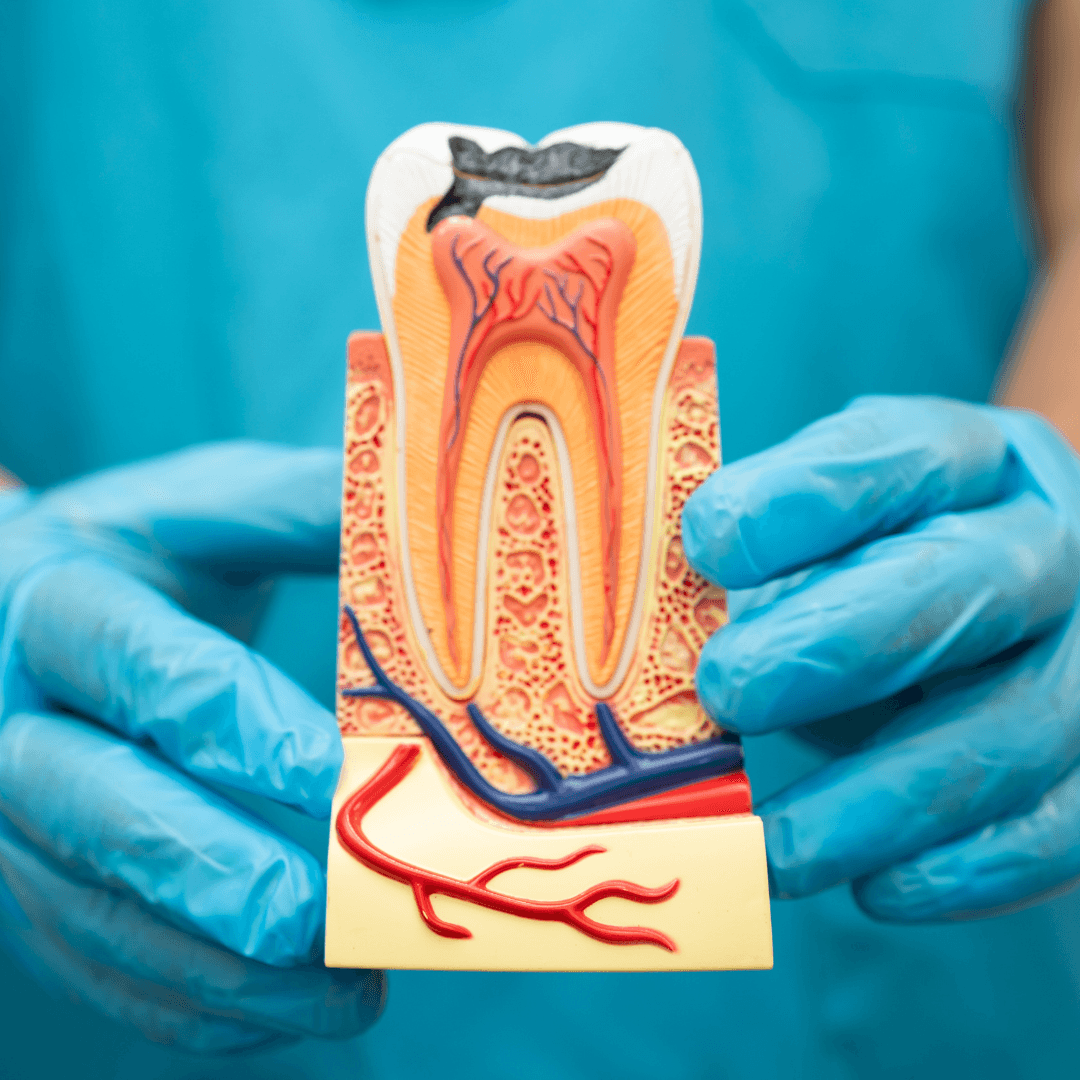
RCT is indicated when bacterial infection has reached the pulp, the living tissue inside your tooth containing nerves and blood vessels. This typically happens due to deep decay, a cracked tooth, repeated dental procedures on the same tooth, or trauma. Symptoms include spontaneous severe pain, prolonged sensitivity to hot and cold, pain on biting, a gum abscess, tooth discoloration, and facial swelling. If you experience any of these signs, early treatment prevents the infection from spreading to surrounding bone and neighbouring teeth.
For straightforward presentations, infected front teeth and premolars, or cases without active abscess, we complete the entire root canal procedure in a single appointment. The pulp is removed, the canals are shaped using precision rotary files, irrigated with antimicrobial solutions, and sealed. A same-day core build-up and temporary crown preparation can follow immediately. Returning for only a crown fitting significantly reduces overall treatment time.
Molars with multiple canals, severely curved root anatomy, previously treated teeth, large periapical abscesses, or calcified canals often require 2–3 carefully spaced visits. Between appointments, a medicated dressing (calcium hydroxide) is placed inside the canals to eliminate residual bacteria and allow healing of surrounding bone. This phased approach is clinically superior for complex infections.
The dental operating microscope is the most significant advance in precision endodontics. Magnification of up to 25x allows the detection and treatment of additional canals missed by routine examination, calcified canals, vertical root fractures, and missed anatomy in re-treatment cases. We routinely use microscope assistance for second-opinion cases and re-treatments sent from other clinics.
A previously treated tooth that develops recurring pain, re-infection, or a persistent lesion can often be salvaged through endodontic re-treatment. We remove the old filling material, re-negotiate the canals, treat any residual infection, and re-seal the root system. This is a highly specialist procedure requiring advanced skill; our success rate for re-treated cases is consistently high.
In rare cases where conventional re-treatment cannot resolve a persistent periapical infection, typically due to anatomical barriers, ledged canals, or broken instruments, an apicoectomy is indicated. This minor surgical procedure involves removing the root tip and the surrounding infected tissue through a small gum incision, then sealing the root end with a biocompatible material. Recovery is rapid and the procedure has an excellent success rate.
In cases where the pulp is exposed during cavity removal but is not yet infected, pulp capping, either indirect or direct, can preserve pulp vitality and avoid the need for a full root canal. We use biocompatible materials including Biodentine and MTA, which promote natural dentine bridging over the exposure. This conservative approach is especially valuable in young patients with developing root systems.
After root canal treatment, the tooth loses its internal blood supply and becomes more brittle over time. A post-operative crown is strongly recommended, and in back teeth, it is essential, to protect the tooth from fracture under chewing forces. We fabricate custom Zirconia or porcelain-fused crowns that restore full function and are indistinguishable from natural teeth.
When Is Root Canal Treatment Needed?
RCT is indicated when bacterial infection has reached the pulp, the living tissue inside your tooth containing nerves and blood vessels. This typically happens due to deep decay, a cracked tooth, repeated dental procedures on the same tooth, or trauma. Symptoms include spontaneous severe pain, prolonged sensitivity to hot and cold, pain on biting, a gum abscess, tooth discoloration, and facial swelling. If you experience any of these signs, early treatment prevents the infection from spreading to surrounding bone and neighbouring teeth.
Single-Visit Root Canal Treatment
For straightforward presentations, infected front teeth and premolars, or cases without active abscess, we complete the entire root canal procedure in a single appointment. The pulp is removed, the canals are shaped using precision rotary files, irrigated with antimicrobial solutions, and sealed. A same-day core build-up and temporary crown preparation can follow immediately. Returning for only a crown fitting significantly reduces overall treatment time.
Multi-Visit RCT for Complex Cases
Molars with multiple canals, severely curved root anatomy, previously treated teeth, large periapical abscesses, or calcified canals often require 2–3 carefully spaced visits. Between appointments, a medicated dressing (calcium hydroxide) is placed inside the canals to eliminate residual bacteria and allow healing of surrounding bone. This phased approach is clinically superior for complex infections.
Microscope-Assisted Endodontics
The dental operating microscope is the most significant advance in precision endodontics. Magnification of up to 25x allows the detection and treatment of additional canals missed by routine examination, calcified canals, vertical root fractures, and missed anatomy in re-treatment cases. We routinely use microscope assistance for second-opinion cases and re-treatments sent from other clinics.
Re-Treatment of Failed Root Canals
A previously treated tooth that develops recurring pain, re-infection, or a persistent lesion can often be salvaged through endodontic re-treatment. We remove the old filling material, re-negotiate the canals, treat any residual infection, and re-seal the root system. This is a highly specialist procedure requiring advanced skill; our success rate for re-treated cases is consistently high.
Endodontic Retreatment & Apicoectomy
In rare cases where conventional re-treatment cannot resolve a persistent periapical infection, typically due to anatomical barriers, ledged canals, or broken instruments, an apicoectomy is indicated. This minor surgical procedure involves removing the root tip and the surrounding infected tissue through a small gum incision, then sealing the root end with a biocompatible material. Recovery is rapid and the procedure has an excellent success rate.
Pulp Capping, Preserving the Living Pulp
In cases where the pulp is exposed during cavity removal but is not yet infected, pulp capping, either indirect or direct, can preserve pulp vitality and avoid the need for a full root canal. We use biocompatible materials including Biodentine and MTA, which promote natural dentine bridging over the exposure. This conservative approach is especially valuable in young patients with developing root systems.
Post-RCT Crown and Core Build-Up
After root canal treatment, the tooth loses its internal blood supply and becomes more brittle over time. A post-operative crown is strongly recommended, and in back teeth, it is essential, to protect the tooth from fracture under chewing forces. We fabricate custom Zirconia or porcelain-fused crowns that restore full function and are indistinguishable from natural teeth.
Key Benefits
- ✓Eliminates severe, debilitating tooth pain
- ✓Stops infection before it spreads to bone
- ✓Preserves your natural tooth and root
- ✓Avoids extraction and the need for an implant
- ✓Modern rotary technique cuts procedure time significantly
- ✓Virtually painless under profound local anaesthesia
- ✓Prevents neighbouring teeth from drifting
- ✓Microscope-assisted precision for complex anatomy
Why Rajesh Dental
Dr. Rajesh Panchineni and the endodontic team at Rajesh Cosmetic and Implant Dentistry in JP Nagar bring specialist-level competency to every root canal procedure. Our digital apex locators, nickel-titanium rotary systems, operating loupes, and microscope capability ensure that even the most anatomically complex canals are treated to the highest standard. We accept second-opinion cases and re-treatments from across Bengaluru.
Frequently Asked Questions
No. Modern RCT performed under good local anaesthesia is pain-free. The procedure actually relieves the agonising pain caused by pulp infection. Some mild soreness for 24–48 hours after treatment is normal and easily managed with common anti-inflammatories.
A single-canal tooth (incisors, canines) typically takes 45–60 minutes. Molars with multiple canals may require 90 minutes or be split across two visits. Complex re-treatment cases are planned individually.
Preserving your natural tooth is almost always the better long-term option. Extraction leads to bone loss, neighbouring tooth drift, and requires replacement (implant or bridge) at greater cost. A root-canal-treated tooth crowned promptly can last as long as a natural tooth.
Simple cases are completed in one visit. Complex cases, large abscesses, calcified canals, or molar re-treatments, typically require 2–3 visits for optimal infection control and healing. We will clearly outline your specific treatment timeline at the initial examination.
In rare cases, re-infection can occur, most often due to a poorly sealed crown that allows bacteria back in, or an untreated additional canal. This is why a proper crown after RCT and routine check-ups are essential. Failed root canals can often be successfully re-treated.
Ready to restore your smile?
Consult with our specialists to see if Root Canal Therapy is the right treatment plan for your clinical needs.
Call To BookTake the next step
Book a Consultation Today
Targeted Conditions & Areas
Learn more about how we apply Root Canal Therapy to specific clinical presentations and local areas.